Welcome to Porters Lake Provincial Park
Welcome to “The Island”. Some of the most noticeable damage from Hurricane Juan can be seen across the exposed causeway. On September 29, 2003, Juan swept through Nova Scotia flattening much of the Park’s mature stand of softwood trees. With Nova Scotia’s high regeneration rate of forest and the tireless efforts of staff during post storm cleanup, new vegetation was established quickly. These trees would now be considered a regeneration stand.
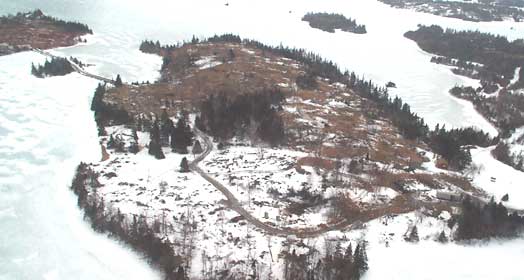
Aerial photo from post hurricane Juan.
Recently Nova Scotia has seen many more significant storms. They have shown how nature is ever-changing and how dynamic our ecosystems are. Many red oaks were also planted in the park to add to biodiversity, habitat and to serve as a long-lived species capable of providing much shade and shelter. How many oaks can you find throughout the park?
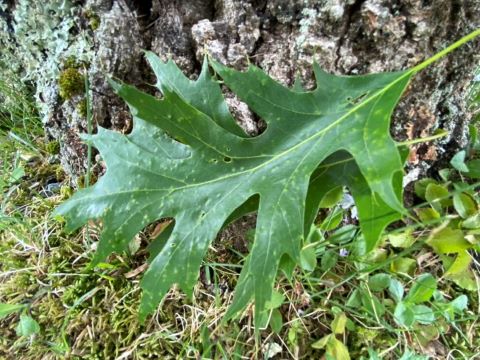
Red Oak leaf.
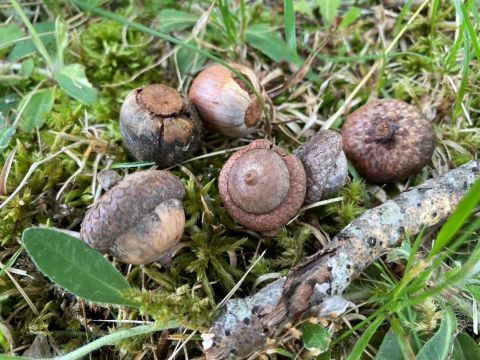
Acorns on the ground.
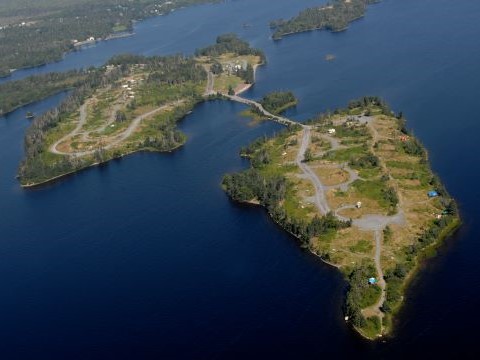
The Island also features a mixture of pull-in campsites and walk-in sites. A short walk to your campsite offers a more quiet and secluded experience. If you are considering booking a site, you can book online, check out the Parks Guide or talk to a staff member. Please respect the privacy of those currently camping.
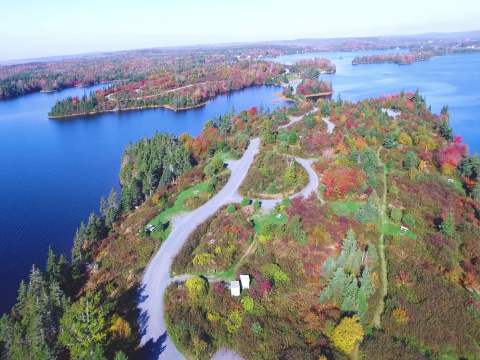
Aerial image of the island at Porters Lake in fall.
Porters Lake Beach area

Welcome to the “Large Beach”. Porters Lake is 19km long, but never more then a kilometer wide and is in the shape of a crescent (photo). The depth of the lake varies significantly from the north to the south end. The south end is approximately five metres deep on average. The north end averages around 12 metres deep, with one part of the lake reaching 30 metres in depth.
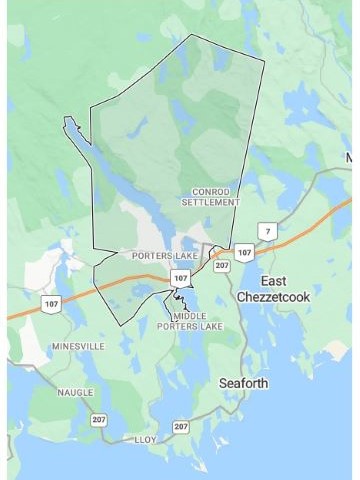
The lake is very popular with outdoor recreation enthusiasts participating in boating, kayaking, fishing, swimming and so much more. Porters Lake is connected to the Atlantic Ocean near Lawrencetown Beach, resulting in various salinities. Razor clams and other shells that may be sharp on feet are possible to observe at the Large Beach.
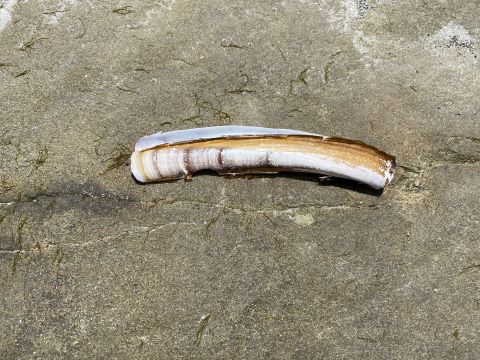
Razor clam shell on a beach.
What other wildlife do you notice in this area? Don’t forget wildlife leave behind many signs and signatures to let us know they were here. First, listen – what do you hear? Look for any tracks, browse, scat, nests, and other examples that you may be sharing this camping park with many other species.
Bob's Pond
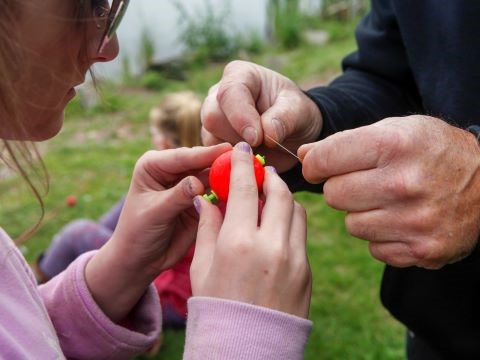
You are now visiting “Bob’s Pond” affectionately named after long time caretaker Robert (Bob) Gimblett. Bob served 26 years with Canadian Forces Airforce Division, retiring as a Warrant Officer ACS Technician in 2001. Bob started with the Department of Natural Resources in 2002 as a park attendant. In 2005 he took over the role as Chief Caretaker until his retirement in 2018.
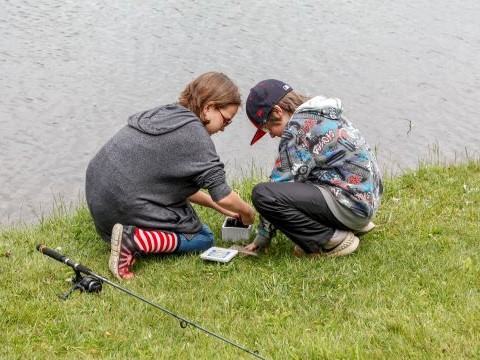
Bob loved fishing and started the stocking of Bob’s Pond in an effort to get kids fishing during their stay at the park. He would ensure there were fishing rods (supplied by himself or the conservations officer service) and lend them to youth who would stay at the park and would take his time to ensure they knew how to tie and bait their hooks. He loved Porters Lake Park and took great pride in the work he did at the park. Bob passed on May 11, 2019, after a battle with cancer. He is missed greatly by staff and patrons of the park.
Sit quietly on the bench at Bob’s Pond and you may notice some of the impressive volume of biodiversity at this pond. Biodiversity means the variety and richness of life and wetlands. You may find evidence of snapping turtles, beaver, frogs, or birds such as the belted king fisher or several species of ducks. Don’t forget that insects make up the largest group of wildlife, they may be found in the water, throughout the vegetation or in the air.
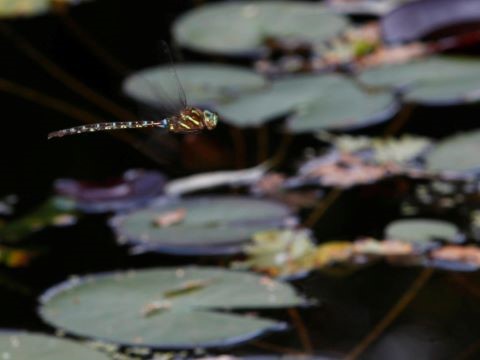
Dragonfly
Dragonflies are one of many species as well as mayfly, caddisfly, salamander, and toads that start their lifecycle in the water. Did you know dragonflies have been clocked flying over 100 km per hour? The common green darner (like the one shown in the picture) is one of 16 migratory dragonflies in North America. These dragonflies embark on a multi-generational migration, where the generation that returns to Canada in spring are the grandchildren of the ones that left in autumn.
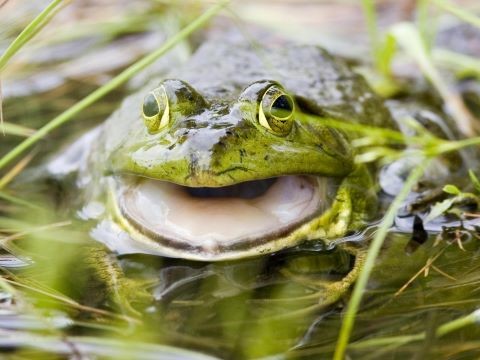
A green frog.
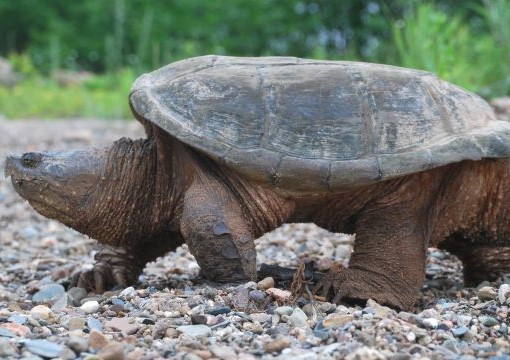
Snapping turtle.
Porters Lake Picnic Park Area
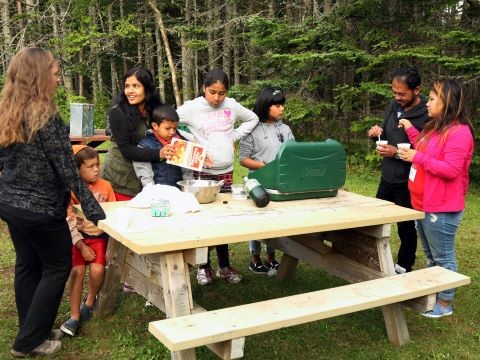
Welcome to the picnic park! Put your feet up, enjoy lunch, go for a swim, or simply relax in the peace and quite of this special space. Did you know research shows that people who spend at least two hours in nature each week report significantly better health and wellbeing? There are many scientific studies showing that being outside in nature does the following:
- Improves cognitive development
- Decreases anxiety and negative thinking
- Lowers depression and stress
- Increases physical activity
- Stimulates the immune system
- Decreases the risk of chronic disease
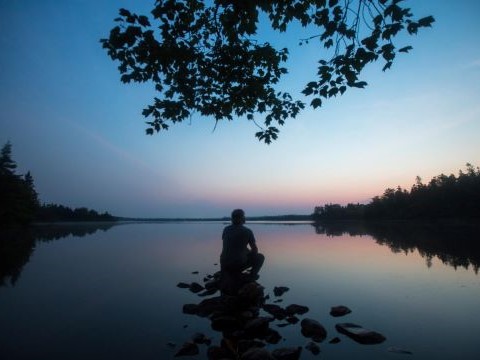
Consider this an invitation to stay a little while, to play, and have fun! Make sure to explore some of the other great parks and places along the Eastern Shore and some of our other Provincial Camping and Day use parks.
Other ways to enjoy the park and nature:
- Have a picnic with family or friends
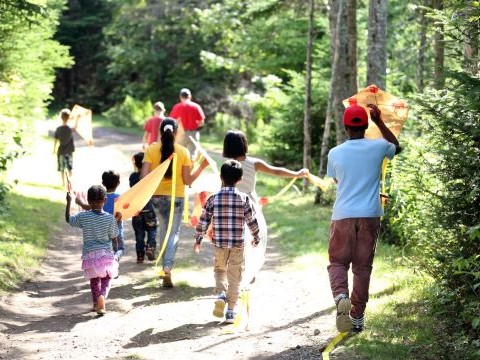
- Fly a kite in an open space
- Make or bring a nature journal
- Hike a trail and enjoy the scenery
- Go fishing
- Sit and listen, count the different sounds
- Enjoy a campfire if burn restrictions allow
- Look for signs of wildlife
- Get your hands dirty
- Throw a frisbee or play a game
- Stargaze
- Relax in a hammock with a book

Trails
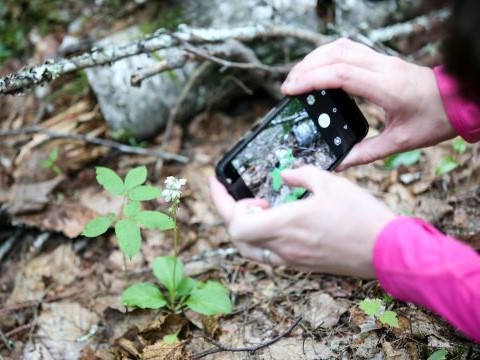
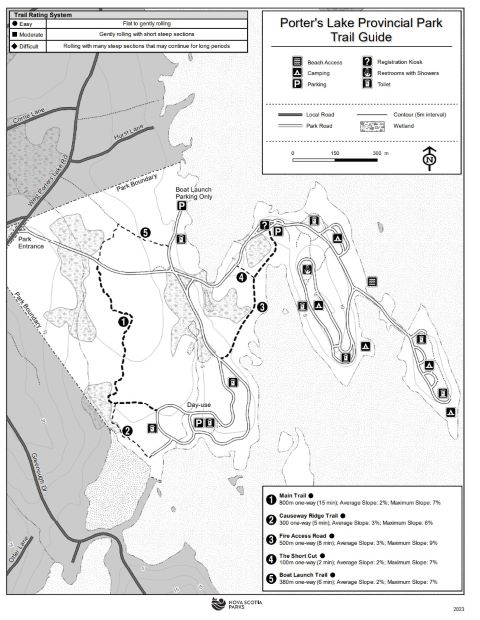
Porters Lake Provincial Park has five short trails, all of which are rated easy with little slope. Your wanderings will take you through scattered maple and birch, as well as some white spruce and balsam fir that survived Hurricane Juan.
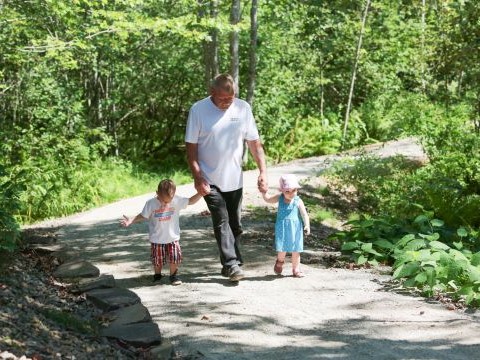
Keep your eyes and ears open for any songbirds, squirrels, or toads. With the variety of habitats in the park from the lake, open fields, and the forest if you move slowly and quietly on your walk there is unlimited opportunity to take in nature and no telling what wildlife you may find. Many times, wildlife may hear, see or smell us long before we arrive and will typically avoid contact with humans. Often times we can look for clues and wildlife signatures that may be left behind such as tracks, scat, browse, and nests.
Download the Porters Lake park trail map here.
Also, don’t forget that wildlife includes plants. How many different colours do you notice? How many different shapes? Enjoy the shade and shelter from the trees along the trail and don’t forget as you hike – leave only footprints and take only pictures or ‘Leave No Trace’. All dogs must be on leash on park property.
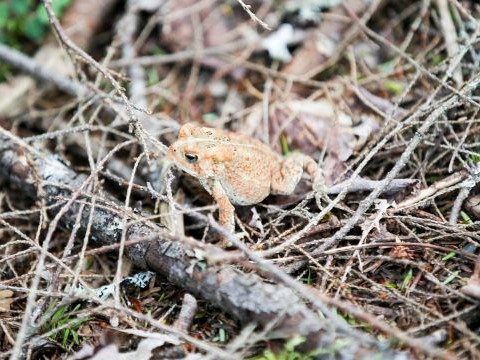
A toad